8 Best Blenders for Grinding Grains (November 2026)
The best blenders for grinding grains include the Ganiza Smoothie Blender for dry grinding on a budget, the Hamilton Beach Power Elite Blender For Smoothies for large wet and dry batches, and the Amateys Personal Blender for Shakes and Smoothies for small grain batches.
On this page (8 sections)
- The best blenders for grinding grains by need
- How these blenders compare for grain grinding
- How we compared these grain-grinding blenders
- What should you check before buying a blender for grain?
- Which blender shape works best for dry grain?
- How do you grind grain in a blender without overheating it?
- Do you need a separate grinder if you have a blender?
- Which blender should you buy for grinding grains?
The best blender for grinding grains for most kitchens is the Ganiza Smoothie Blender, because its 900W peak motor and 10 oz grinding cup with a flat blade are built for small dry batches. Pick the Vitamix 48 oz.
Dry Grains Container if you already own a full-size Vitamix, or the KOIOS combo for the largest grind jar here.
Grinding grain at home is a different job from making a smoothie. A tall pitcher with a cross blade pushes wet food down and around, but dry grain settles at the bottom and stops moving.
The best blender for grinding grains gives you a flat blade and a small, sealed cup. That keeps the grain in contact with the blade and stops it packing into a hard lump.
Our picks at a glance
-
1

-
2
 Best for large wet and dry batches
Hamilton Beach Power Elite Blender For Smoothies
9.3/10 our score
See it on Amazon -
3
 Best for small grain batches
Amateys Personal Blender for Shakes and Smoothies
9.1/10 our score
See it on Amazon
- 4
 Check it
KOIOS 4-in-1 Blender/Food Processor Combo Max 1000W
Best for one base doing everything - 5
 Best for crushing before grindingCheck it
- 6
 Check it
Savorfuze Smoothie Blender Grinder Combo
Best for quick personal grinding - 7
 Check it
Vitamix 48 oz. Dry Grains Blender Container
Best for Vitamix owners grinding flour - 8
 Best for slow cold-press grindingCheck it
The best blenders for grinding grains by need
The Ganiza set is the strongest overall for dry grinding, while each other pick solves a more specific job. Decide whether you want a full blender set, a container for a machine you own, or a slow auger first.
Read the grinder entry in each write-up closely: the motor gets the attention, but the flat blade and the cup size are what decide whether grain turns into meal or just rattles around.
Ganiza Smoothie Blender: Best for dry grinding on a budget
- 900W peak motor, 25,000 rpm
- 10 oz grinding cup with flat 2-blade
- 6-blade cross for smoothies
- Dishwasher-safe cups and lids
A 15-piece set that covers smoothies and small dry grinds with one base. The grinding cup and flat blade are the parts that matter for grains.
Pros
- Grinding cup and flat blade included
- 900W peak power at 25,000 rpm
- Cups and to-go lids are dishwasher safe
Cons
- Only one speed setting
- Grinding cup holds just 10 oz
Ganiza suits a kitchen that wants smoothies and small dry grinds from one base. The 15-piece set includes a 10 oz grinding cup and a flat 2-blade, which is the pair that matters for grain.
The 900W peak motor spins at 25,000 rpm, so short pulses move through a small batch quickly. You also get a 24 oz portable cup and two 17 oz cups for wet blending.
The 6-blade cross handles smoothies and ice, while the flat blade takes coffee beans, spices, nuts and grain. Cups and to-go lids are dishwasher safe, and the base has non-slip pads and a cooling fan.
The cups are BPA-free plastic, so they are lighter to shake than glass.
Its trade-off against the others here is size. The grinding cup holds only 10 oz, so you grind in batches rather than one big jar.
That is fine for home baking, less so for a week's flour. The single speed also means you grind by pulsing, not by turning a dial down for hard grains.
Hamilton Beach Power Elite Blender For Smoothies: Best for large wet and dry batches
- 700W peak power
- 40 oz glass jar
- 12 functions on 5 buttons
- Stainless steel Ice Sabre blades
A big glass jar with 12 functions and a spout. Good for grinding larger amounts of grain and pouring the flour or meal straight out.
Pros
- 40 oz glass jar with pour spout
- 12 functions from 5 buttons
- Jar, lid and blades are dishwasher safe
Cons
- 700W peak is below the top pick
- Glass jar is heavier than plastic
Hamilton Beach suits buyers who grind larger amounts and want to pour straight from the jar. Its 40 oz glass jar takes more grain per run than any grinding cup in this roundup.
Twelve functions sit on five buttons, with the Wave Action system pushing ingredients back down into the blades. The stainless steel Ice Sabre blades handle frozen food and hard ingredients.
The manual spells out the working limits: keep the jar below the 3-cup level for thick mixes, and add at least one cup of liquid per recipe or the blending action stalls.
A spout on the jar lets you pour flour or meal into a bowl without a scoop. The jar, lid and removable blades are all dishwasher safe.
The 700W peak motor is below the Ganiza and KOIOS, so expect more pulsing and more rest between batches. The glass jar also weighs more than a plastic cup when full.
Choose it when batch size and easy pouring matter more than raw motor power.
Amateys Personal Blender for Shakes and Smoothies: Best for small grain batches
- 350W motor, up to 21,000 rpm
- Flat 2-blade grinder and 4-blade cross
- 10 oz grinding cup and 24 oz travel bottle
- Three speed settings plus pulse
A compact set with a dedicated flat blade for coffee, spices and nuts. The small grinding cup suits test batches of grain better than a full pitcher.
Pros
- Grinding cup and flat blade included
- Adjustable speeds for soft and hard foods
- Removable blade for easier cleaning
Cons
- 350W motor is the lowest here
- Small cups limit batch size
Amateys suits small test batches. Its 350W motor reaches up to 21,000 rpm and the set pairs a 4-blade cross with a flat 2-blade for grinding.
The 10 oz grinding cup takes coffee, spices and nuts, and a 24 oz bottle handles shakes. Speeds are adjustable: "1" is 15,000 rpm for soft food, "2" is 21,000 rpm for hard food, and "P" is full speed for harder ingredients.
The base also has overheating protection that cuts the power, which matters when you grind dry food in repeated pulses.
The blade is removable for cleaning, and the cups and lids are BPA-free. Four suction cups keep the base steady on the counter.
Its small motor is the real limit. Grind grain in short bursts and let the base cool between cups.
That makes it a starter grinder for small households rather than a daily flour mill. The speed dial does give it one edge over the Ganiza: you can step down for soft grains instead of relying on pulse timing alone.
KOIOS 4-in-1 Blender/Food Processor Combo Max 1000W: Best for one base doing everything
- 1000W motor
- 32 oz pitcher, two 22 oz to-go cups, 22 oz chopper bowl
- 11 oz grinding cup
- Dishwasher-safe cups, lids and blades
One motor base runs a blender, chopper, grinder and travel cups. The 11 oz grinding cup is the largest dedicated grind jar in this roundup.
Pros
- 1000W motor
- Largest grinding cup here at 11 oz
- Detachable cups and blades are dishwasher safe
Cons
- Four attachments take more cupboard space
- Chopper bowl adds parts to wash
KOIOS suits a counter that can only hold one appliance. A single 1000W base drives a 32 oz pitcher, two 22 oz to-go cups, a 22 oz chopper bowl and an 11 oz grinding cup, the largest grind jar in this roundup.
The stainless steel blades and speed dial let you control texture, and the safety lock lid plus non-slip suction base keep it steady. Overheating protection is built in.
The grinder cup shares the same base, so you can grind grain and then switch to the chopper bowl for meat or vegetables without a second machine on the counter.
All cups, lids and blades detach and are dishwasher safe. The set is BPA-free and the 32 oz pitcher is enough for family smoothies.
The trade-off is parts. Four attachments mean more cupboard space and more pieces to wash after a grinding session.
The grinder blade is a flat blade rather than a cross, so plan on short pulses for grain. If you only grind grain, a smaller set does the same job with less clutter.
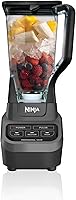
Ninja Professional BL610: Best for crushing before grinding
- 1000W motor
- 72 oz Total Crushing pitcher
- Total Crushing Technology blades
- BPA-free dishwasher-safe pitcher
A big 72 oz pitcher with strong crushing blades. It handles ice and frozen fruit well and leaves you a large batch to work through in one go.
Pros
- 1000W motor and Total Crushing blades
- 72 oz pitcher for large batches
- Pitcher is BPA-free and dishwasher safe
Cons
- No separate grinding cup
- Large pitcher is bulky to store
Ninja suits buyers who crush ice and frozen fruit often and want a big pitcher for it. The 1000W motor and Total Crushing blades turn ice to snow in seconds, and the 72 oz pitcher takes large batches.
Four speeds give you more control than a single-button machine. The pitcher is BPA-free and dishwasher safe, and a recipe guide comes in the box.
The 64 oz max liquid mark tells you how much room the jar leaves for ice and fruit.
For grain, the advantage is batch size. A 72 oz pitcher lets you work through a lot of grain in one session, and the strong blades break down hard ingredients.
The blades sit low in the jar and pull food down toward them, which is closer to how a grinding cup works than a plain cross blade in a tall jug.
The catch is that there is no separate grinding cup or flat blade in the set. You grind in the tall pitcher, where dry grain can settle.
Pulse in small amounts and shake the pitcher between runs. It is the best of the full-size pitchers here for grain, but the dedicated cups still beat it on control.
Savorfuze Smoothie Blender Grinder Combo: Best for quick personal grinding
- 900W peak motor, 25,000 rpm
- 4-blade cross and flat grinder blade
- 10 oz grinding cup and two 700 ml cups
- Twist-to-operate design
A 16-piece personal set with a flat grinder blade and a 10 oz cup. The twist-to-start design means no buttons to learn before your first batch.
Pros
- Flat grinder blade and 10 oz cup
- 900W peak at 25,000 rpm
- Twist-to-operate, no settings
Cons
- No speed control
- Motor base is not dishwasher safe
Savorfuze suits anyone who wants to grind without learning controls. Its twist-to-operate design starts when you twist the cup onto the base and stops when you twist it off.
There are no settings to set before your first batch.
The 900W peak motor runs at 25,000 rpm, and the 16-piece set includes a flat grinder blade and a 10 oz grinding cup. Two 700 ml cups and to-go lids cover smoothies and travel drinks.
The flat blade is a Food Grade 304 stainless steel piece, the same grade the set uses for its blending blade.
The motor only runs when the cup is locked, which adds a layer of safety for families. Cups and blades are dishwasher safe, and the base has four non-slip pads and a cooling fan.
The kit also adds two spare blade sealing rings, a solid lid, drink rings and a cleaning brush, so the set is more complete than its piece count suggests.
With no speed control, you grind by pulsing. That works for small batches of grain, but a machine with a speed dial gives more control over the final texture.
Vitamix 48 oz. Dry Grains Blender Container: Best for Vitamix owners grinding flour
- 48 oz dry grains container
- SELF-DETECT for Ascent and Venturist blenders
- Reverse vortex keeps dry ingredients off the blades
- Dishwasher-safe container and lid
A container rather than a full blender. It turns a Vitamix you already own into a grain mill for fresh flour, batter and thick dough.
Pros
- Designed for whole grains and flour
- SELF-DETECT on Ascent and Venturist
- Container and lid are dishwasher safe
Cons
- Needs a Vitamix base you already own
- No motor or base included
Vitamix suits owners of a full-size Vitamix who want to grind fresh flour. This is a 48 oz container, not a blender, and it fits all full-size Vitamix machines.
The container is designed to create a reverse vortex that pushes dry ingredients away from the blades to stop packing. That makes it the right shape for whole grains, batter and thick yeast dough.
The clear lid with a leak-proof seal lets you watch progress, and the removable vented lid plug doubles as a 2 oz measuring cup and lets you add ingredients while the machine runs.
On Ascent and Venturist Series machines, SELF-DETECT recognizes the container and adjusts settings, and up to five Dry Grains Container programs are available. Laser-cut stainless steel blades are built for whole grains.
It comes with a lid, the lid plug and an S2 low-profile tamper that helps push thick mixes into the blades.
Container and lid are dishwasher safe. The trade-off is the need for a Vitamix base you already own: there is no motor in the box.
PSIIDAN Blender Juice: Best for slow cold-press grinding
- Slow single auger masticating juicer
- 1800W motor
- Separates pulp from juice
- Three speeds
A slow auger machine that crushes and grinds rather than spinning blades. Suits buyers who want one quiet machine for grains and juice.
Pros
- Slow auger grinds without high blade speed
- 1800W motor
- Three speed settings
Cons
- Juicer first, blender second
- Tall upright body needs counter height
PSIIDAN suits a buyer who wants slow grinding and juicing from one machine. It is a slow single auger masticating juicer with a 1800W motor and three speeds.
A slow auger crushes and grinds instead of spinning blades at high speed. That keeps heat down and separates pulp from juice, which matters for fresh produce and for grain that should not get warm.
The polycarbonate body is BPA-free and the machine runs quietly for its size. It's a tall upright unit at roughly 20 inches high, so check counter height and clearance before you buy.
The 3-speed control gives more settings than most blenders here, and the two containers give you a place for pulp and a place for juice.
The trade-off is focus. This machine is a juicer first, so it's the right pick only if juice and grains are both on your list.
For grain alone, the Ganiza or KOIOS sets take less counter space and do the job. Its slow speed is the point, though: it is the only machine here that grinds without high blade speed, so heat-sensitive grains are safest in it.
How these blenders compare for grain grinding
The table lines up the machines that can grind grain and shows what each one offers for dry work. Look at the grinding cup, the blade type and the motor before the price tier.
| Product | Best for | Power | Pitcher/cup capacity | Included blades | Our score |
|---|---|---|---|---|---|
| Ganiza Smoothie Blender | dry grinding on a budget | 900W peak | 24 oz portable cup plus 10 oz grinding cup | 6-blade cross and flat 2-blade | 9.5 |
| Hamilton Beach Power Elite Blender For Smoothies | large wet and dry batches | 700W peak | 9.3 | ||
| Amateys Personal Blender for Shakes and Smoothies | small grain batches | 350W | 9.1 | ||
| KOIOS 4-in-1 Blender/Food Processor Combo Max 1000W | one base doing everything | 1000W | 9.0 | ||
| Ninja Professional BL610 | crushing before grinding | 1000W | 8.8 | ||
| Savorfuze Smoothie Blender Grinder Combo | quick personal grinding | 900W peak | 8.6 | ||
| Vitamix 48 oz. Dry Grains Blender Container | Vitamix owners grinding flour | 8.5 | |||
| PSIIDAN Blender Juice | slow cold-press grinding | 1800W | 8.0 |
Our score weighs specs, features and buyer feedback against what you're shopping for. The top four all include a flat blade or a dedicated grind jar, which is why they lead for grain.
The Ninja and PSIIDAN sit lower for this job: the Ninja has no separate grinding cup, and the PSIIDAN is built around juicing rather than dry flour. The Vitamix container scores on fit for Vitamix owners, not as a standalone blender.
How the three approaches differ
The roundup really covers three kinds of machine. The first is a set with a flat blade and a small grind cup, which includes the Ganiza, Amateys, KOIOS and Savorfuze.
These keep grain in a narrow jar where it stays in the blade's path.
The second is a full-size pitcher. The Hamilton Beach and Ninja use big jars with wide blades; you grind more at once but have to pulse and shake to keep the grain from packing at the bottom.
The third is the Vitamix container and the PSIIDAN auger. One extends a blender you already own with a jar shaped for dry ingredients; the other grinds slowly with an auger and adds juicing.
Pick the approach first, then the model within it.
How we compared these grain-grinding blenders
We compared the machines on the parts that decide dry grinding results: whether a flat blade or grinding cup is included, motor power and speed, cup or jar size, and how easy each one is to clean.
Blade type came first. A flat 2-blade in a small sealed cup keeps grain moving; a tall pitcher with a cross blade lets dry grain settle.
Every pick at the top of this list offers the first setup or a container shaped for dry ingredients.
Power and speed came next. The 900W and 1000W motors here run at 25,000 rpm or close to it, which shortens each pulse.
The 350W Amateys needs gentler batches. The 1800W PSIIDAN is the outlier: it runs an auger slowly rather than spinning blades fast.
Cleaning and safety rounded out the comparison. We noted which cups and blades are dishwasher safe and which bases lock the cup in place before the motor runs.
We also looked at what each set includes beyond the base, such as extra lids, spare sealing rings and tampers. All facts come from the product data; we did not test these machines in person.
What should you check before buying a blender for grain?
Check the blade and the cup first, because they decide whether the grain grinds at all. Motor power matters next, then capacity and cleaning.
Does the set include a flat grinding blade?
A flat 2-blade is the part made for dry ingredients like coffee, spices and grain. A 4-blade or 6-blade cross is shaped for wet blending.
Look for a set that includes both so one base does both jobs. The Ganiza, Amateys, KOIOS and Savorfuze sets each include a flat blade and a small grinding cup.
A pitcher-only machine like the Ninja or Hamilton Beach makes you grind with a cross or wide blade, which takes more pulsing and shaking.
How big a grinding cup do you need?
An 8 to 11 oz grinding cup suits most home bakers grinding a few cups of flour at a time. The KOIOS 11 oz cup is the largest dedicated grind jar here.
A 40 oz glass jar like the Hamilton Beach takes more grain per run but gives less control over small batches. Pick the size by how often you bake: a 10 oz cup is plenty for one loaf, while a family that bakes weekly will want the bigger jar or the 48 oz Vitamix container.
How much motor power does dry grinding need?
Dry grinding needs enough power to keep the blade moving through dense grain. A 350W motor handles small batches.
A 900W to 1000W motor grinds faster and takes larger loads without stalling. Higher wattage is not a guarantee on its own: blade type and cup size still come first.
The cooling fan and non-slip pads on the Ganiza and Savorfuze bases are also worth checking, since repeated dry batches are what make a motor work hardest.
Should you buy a full blender or a container?
Buy a full blender when you also make smoothies and want one base for both jobs. Buy a container only when you already own the matching base and grind grain often.
The Vitamix 48 oz. Dry Grains Container costs less than a second blender and is shaped for flour and dough.
If you own no Vitamix, a set like the Ganiza or KOIOS gives you the grinder and the blender in one purchase.
Which blender shape works best for dry grain?
A small sealed cup beats a tall pitcher for dry grain. Grain settles in a big jar and stops reaching the blades, while a narrow grinding cup keeps it in the blade's path.
That is why the top picks pair a flat blade with a 10 to 11 oz cup. A full-size pitcher still works if you pulse and shake it between runs.
Use the pitcher for wet blending and the cup for dry grain when a set offers both. The cup also seals with a lid, so ground flour can sit in it until you need it instead of being poured out straight away.
How do you grind grain in a blender without overheating it?
Grind in short pulses and give the motor rest between them. Fill the cup about half full so the grain has room to move.
Pulse for a few seconds, stop, and shake the cup to loosen the grain at the bottom. Repeat until the texture suits you.
Stop if the cup feels warm, since heat can damage the motor and affect the flour. A blender with a cooling fan, like the Ganiza or Savorfuze base, handles repeated batches better.
Grind hard grains in smaller loads than soft ones, and let the base cool fully between cups when you are working through a large amount.
Do you need a separate grinder if you have a blender?
No, if your blender set includes a flat blade and a grinding cup. That setup covers grain, coffee, spices and nuts in small batches.
A separate grinder makes sense when you grind large amounts every week or want very fine flour. For occasional baking, the grinding cup in a set like the Ganiza or KOIOS does the job without another appliance on the counter.
A grain mill still wins for very fine flour and for volume, but for a few cups at a time the blender cup is the simpler buy.
Which blender should you buy for grinding grains?
Buy the Ganiza Smoothie Blender for most kitchens. It gives you a flat grinding blade, a 10 oz cup and a 900W motor in one set, and the cups are dishwasher safe.
Choose the Hamilton Beach Power Elite when you grind large batches and want to pour from a 40 oz glass jar. Pick the KOIOS combo if you want the biggest grind cup here and one base for every kitchen job.
The Amateys suits small starter batches and the Savorfuze suits button-free grinding.
Vitamix owners should add the 48 oz. Dry Grains Container rather than a second blender.
If you're still weighing general-purpose machines, our budget blender picks and the Oster blender lineup cover everyday blending, and the Ninja comparison helps if you're set on that brand. For drinks on the move, see the blenders with to-go cups.
Our top 3 picks at a glance
-
1
-
2
Best for large wet and dry batches
Hamilton Beach Power Elite Blender For Smoothies
9.3/10 our score
See it on Amazon -
3
Best for small grain batches
Amateys Personal Blender for Shakes and Smoothies
9.1/10 our score
See it on Amazon
Frequently asked questions
Can a regular blender grind grains into flour?
Yes, a blender with a flat blade and a small grinding cup can turn grains into coarse flour or meal. Work in small batches and give the motor short breaks so the flour does not heat up.
Fine pastry flour is harder to reach than coarse wholemeal.
How long should I grind grain in a blender?
Run the blender in short pulses of a few seconds each, then stop and shake the cup. Most grains reach a usable meal in under a minute of total pulsing.
Stop sooner if the flour starts to feel warm.
Is a dry grains container worth it for a Vitamix?
Yes, if you already own a full-size Vitamix and grind grain often. The 48 oz container is shaped to keep dry ingredients moving instead of packing at the blades.
It also handles batter and thick yeast dough.
Why does my blender struggle with dry grains?
Dry grains need a flat blade and a small cup, not a tall pitcher with a cross blade. Grain settles at the bottom of a big jar and stops circulating.
A dedicated grinding cup keeps the grain in contact with the blade.
Can I grind grains in a personal blender?
Yes, for small batches. A personal blender with a flat grinding blade and a 10 oz cup is enough for a few cups of flour or meal.
Larger batches need a bigger grinding cup or a full-size base.
Do I need a high-power blender to grind grain?
Not always. A 350W motor with a flat blade can grind small amounts of grain.
Higher wattage helps with larger batches and harder grains, but blade type and cup size matter more than raw power for dry grinding.