Blender vs Immersion Blender: Which Do You Need? (October 2026)
Choose a full-size blender for large batches and frozen drinks; choose an immersion blender for small jobs in a pot or bowl. This blender vs immersion blender guide helps you match each style to your recipes, kitchen space and cleanup routine.
On this page (10 sections)
- Blender vs immersion blender: what is the main difference?
- Which blender type suits your usual recipes?
- Who should choose a full-size blender?
- Who should choose an immersion blender?
- How should you set up each style?
- What mistakes should you avoid?
- Which is easier to use and clean?
- Which blender is better for a small kitchen?
- Which blender should you buy for your kitchen?
- Blender vs immersion blender: which should you choose?
Choose a full-size blender for large batches and frozen drinks; choose an immersion blender for small jobs in a pot or bowl. In a blender vs immersion blender comparison, the better fit depends on what you make, how many portions you prepare and where you want to blend.
A countertop blender has a motor base and a pitcher that holds the ingredients while the blades run. An immersion blender puts the motor in your hand and the blade at the end of a shaft, so you can work in a suitable pot, bowl or cup.
The two styles overlap on jobs such as pureeing soup and making sauces. Their biggest differences are batch size, how much you guide the blending and whether you need to transfer food into a separate container.

Blender vs immersion blender: what is the main difference?
A full-size blender works in its own pitcher, while an immersion blender goes into a separate container. That difference shapes how much you can prepare, where the work happens and what you need to wash.
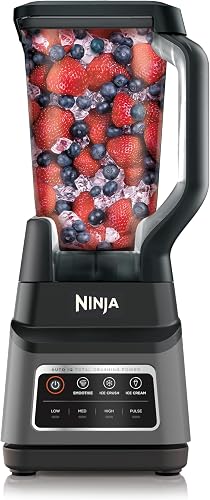
With a full-size blender, you add ingredients to the pitcher, secure the lid and run the appliance from its base. The Ninja Professional Plus BN701 has a 72 oz pitcher with a marked maximum liquid capacity of 64 oz, plus three timed Auto-iQ programs.
An immersion blender is a handheld motor body attached to a blending shaft. Place the blade end in a suitable pot, bowl or mixing cup, then guide it through the food as it blends.
The Cuisinart Smart Stick CSB-179 has an 8-inch stainless steel blending shaft and variable speed control. The Braun MultiQuick 7 uses Easy SmartSpeed, where button pressure changes the speed.
If you’re comparing countertop styles, our countertop blender guide explains how pitcher design and other blender types fit different kitchens.
Which blender type suits your usual recipes?
Choose by the jobs you make most: a full-size blender suits batches and frozen drinks, while a hand blender suits small, direct blending tasks. Think about your most common recipe first, then check how the appliance handles the other jobs you do often.
Is a full-size blender better for smoothies?
A full-size blender is a good fit for several smoothie servings or recipes that include ice. The BN701's Total Crushing blades are designed for crushed ice, and its pitcher gives you room to make a larger batch.
A pitcher keeps ingredients enclosed while the blender runs. That helps when you want a pourable drink for several glasses or need to blend ingredients together in one container.
For a single small smoothie, a large pitcher may mean more setup and washing than the recipe needs. If your smoothie is too thin, see our guide on how to make a smoothie thicker.
When does an immersion blender make more sense?
An immersion blender suits soup, sauces and other foods you can blend where you prepared them. It saves a transfer step and gives you direct control over the blade's movement.
The Cuisinart shaft reaches into pots, bowls and pitchers for jobs such as pureeing and emulsifying. The set also includes a whisk, chopper and 2-cup mixing cup for separate prep tasks.
The Braun comes with a beaker, chopper and whisk. Its SplashControl design is intended to reduce splashing, and its variable control lets you change speed by pressing the button with more or less force.
Can either type make soup?
Both styles can puree soup, but an immersion blender lets you blend directly in a suitable pot. A full-size blender requires you to move soup into its pitcher, and you may need to blend in batches.
For hot food, follow the appliance manual for temperature limits and safe use. Don't fill a pitcher beyond its marked maximum, and take care when moving hot liquid.
The immersion blender keeps the pot in place, but the blade and shaft still need room to move. Use a deep container and keep the blade head below the surface while it runs.
Who should choose a full-size blender?
Choose a full-size blender if you regularly make several servings, blend frozen drinks or want a dedicated pitcher. It makes more sense when the capacity and contained blending setup match your normal recipes.
The Ninja BN701 is a practical fit for a household that makes smoothies or frozen drinks in batches. Its Total Crushing blades are designed for ice, and three Auto-iQ programs combine timed pulsing, blending and pausing.
A full-size model may also suit you if you prefer to add ingredients, secure a lid and let a preset run. You still need to measure ingredients, respect the maximum liquid line and pour the result into serving cups.
Skip the full-size style if you mostly blend one small portion or want to puree food in the pot where it was cooked. A countertop base and pitcher take storage space, and the separate container adds another item to clean.
For a focused look at the Ninja model, see our Ninja blender guide.
Who should choose an immersion blender?
Choose an immersion blender if you often puree soup, blend sauces or work with small amounts in a pot or bowl. It suits cooks who want the food to stay in its original container during blending.
The Cuisinart Smart Stick is a straightforward fit when you want a stainless steel shaft, variable speed slide control and push-button continuous or pulse action. Its whisk, chopper and mixing cup add options for small prep jobs.
The Braun MultiQuick 7 fits cooks who want variable control by button pressure and several attachments. The beaker supports smaller amounts, while the chopper and whisk cover tasks beyond blending.
Skip an immersion blender if you expect a hands-free appliance for large batches or regularly crush ice. You have to guide the shaft, keep the blade positioned safely and check the manual before using a model for a task beyond its stated purpose.
How should you set up each style?
Set up the blender that matches the recipe, and check its manual before adding food or turning it on. A little preparation helps prevent spills, overfilling and unsafe contact with moving blades.
For a full-size blender, place the base on a stable, level surface and check that the pitcher is seated properly. Add ingredients without passing the marked maximum liquid capacity, fit the lid securely and keep hands and utensils away from the blades while the motor runs.
For an immersion blender, use a pot or container deep enough to hold the blade head beneath the food. Keep the shaft upright or at a slight angle, and make sure the blade is fully immersed before starting.
When blending hot soup, take care around steam and splashes. If the manual doesn't allow blending directly in a hot pot, let the food cool and transfer it in manageable amounts to an approved container.
What mistakes should you avoid?
The most common mistakes are overfilling a pitcher, running an immersion blender with its blade exposed and using a tool for a job its manual doesn't support. Match the container and amount to the appliance before blending.
With a countertop blender, the maximum liquid line matters even when the pitcher has extra space above it. Leave room for movement, especially when blending liquids, and use a suitable setting rather than forcing ingredients against the blades.
With an immersion blender, don't start with the blade above the food or lift it out while it is running. Both can send food outward; use a deep container and pause the motor before repositioning the shaft.
Don't assume the included attachments make every model suitable for ice or hard ingredients. Check the instructions for the specific appliance and attachment, and don't use an immersion blender to crush ice unless the manual says it can.
Which is easier to use and clean?
A full-size blender runs from a base, while an immersion blender needs your hand to guide it. The hand blender may mean fewer dishes when you blend in the cooking pot, while some full-size blender parts are dishwasher safe.
The BN701 has three Auto-iQ programs that combine timed pulsing, blending and pausing. Its pitcher and stacked blade assembly are top-rack dishwasher safe.
With a hand blender, you guide the blade and choose how long to blend. The Cuisinart has variable speed by slide control and a button for continuous or pulse action; the Braun's speed responds to button pressure.
Clean each appliance according to its manual. Unplug it before cleaning, keep motor bases and electrical handles away from water, and handle blade assemblies carefully.
For more detail on care, read our guide to cleaning a blender jar, lid and blades.
Which blender is better for a small kitchen?
An immersion blender is easier to store when you have space for a handle and attachments but not for a countertop base and pitcher. Check the size of the full set, because accessories also need a home.
The Cuisinart includes a chopper, whisk and mixing cup, while the Braun includes a beaker, chopper and whisk. Those tools can cover several small prep jobs, but they add storage needs.
A full-size blender can earn its counter or cabinet space if you make batches often. The BN701's family-size pitcher suits that routine, but it may be more appliance than you need if you usually blend a single portion.
Measure the shelf or cabinet where you plan to keep the appliance. Leave enough room to lift out the pitcher or attachments without moving other kitchen items.
Which blender should you buy for your kitchen?
Pick the Ninja BN701 for larger batches and frozen drinks, the Braun MultiQuick 7 for variable hand control and attachments, or the Cuisinart Smart Stick for direct pot-side blending. Choose based on the task you repeat most, not the longest feature list.
Buy a full-size model if you regularly blend for several people, use ice or want a pitcher for pourable drinks. Buy an immersion model if you mainly puree soup, mix sauces or blend small amounts where you cooked them.
If you choose a countertop blender, see how to use a blender step by step. If you're still weighing types, return to the countertop blender guide to compare styles for your kitchen.
Blender vs immersion blender: which should you choose?
Choose the full-size blender if your regular jobs need a pitcher; choose the immersion blender if you want to blend directly in a pot or bowl. Start with your usual portion size, then consider storage and cleanup.
A household making large smoothies or frozen drinks will get more use from the BN701's pitcher and ice-crushing blades. A cook who purees soup and sauces in small batches may prefer a hand blender's direct approach.
If you expect both styles to handle different jobs, pick the one that makes your most frequent task easier. Check the manual before using it for less common recipes, especially ice or hot food.
Frequently asked questions
Is a blender or immersion blender better for smoothies?
A full-size blender is usually the easier choice for several servings or a recipe with ice. An immersion blender can handle a small, soft-fruit smoothie in a suitable tall container, but you need to guide it and keep the blade head covered.
Check your recipe and the appliance instructions before blending ice.
Can an immersion blender crush ice?
Don't assume an immersion blender can crush ice. Check the manual for the exact model and attachment before trying it, since ice crushing isn't specified for these immersion blender attachments.
The Ninja BN701 has Total Crushing blades for ice and frozen drinks.
Can I use an immersion blender in a hot pot?
An immersion blender can be useful for blending soup in its cooking pot, but check the manual for temperature limits and safe use. Keep the blade head submerged while blending to limit splashes and take care around hot liquid.
Let food cool before transferring it if your manual doesn't allow blending in the pot.
Which blender is easier to clean?
An immersion blender can mean less cleanup when you blend directly in the cooking pot, though its shaft still needs cleaning after use. The Ninja BN701 pitcher and stacked blade assembly are top-rack dishwasher safe.
Follow each model's manual for cleaning and keep electrical parts away from water.