Can You Grind Coffee Beans in a Blender?
Yes, you can grind coffee beans in a blender, especially for a coarse grind. Use short pulses with a small batch, check the texture between bursts, and confirm your blender's manual allows dry ingredients.
On this page (9 sections)
- Can you grind coffee beans in a blender?
- How do you grind coffee beans in a blender?
- What grind size can a blender make?
- Does a blender change the coffee's flavor?
- Which blender suits occasional coffee grinding?
- What mistakes should you avoid when grinding coffee in a blender?
- How do you clean a blender after grinding coffee?
- When should you choose a coffee grinder instead?
- Can you grind coffee beans in a blender, or should you buy a grinder?
Yes, you can grind coffee beans in a blender, especially when you need a coarse grind for French press or cold brew. Use a small batch, pulse briefly, and check the texture often because a blender can leave both fine particles and larger pieces.
A blender works as an occasional workaround if its manual allows dry ingredients. If you brew coffee often or need a specific, repeatable grind, a burr grinder is easier to control.
Can you grind coffee beans in a blender?
Yes, a blender can turn whole beans into grounds, but the texture may be uneven. Its blades chop beans in an open jar instead of guiding them through a fixed grinding gap.
That makes the blender more useful for coarse grounds than for a precise, fine grind. Beans can settle below the blades, while smaller particles collect near the bottom.
For one brew, a small batch is easier to manage than a full jar. If you're new to the controls, how to use a blender step by step explains basic setup and safe operation.
How do you grind coffee beans in a blender?
Add a small batch and use short pulses, checking the grounds between bursts. Avoid running the blender continuously, which makes it harder to stop at the texture you want.
- Check your blender's manual to confirm it allows dry ingredients.
- Make sure the jar and blades are clean and completely dry.
- Add enough beans to cover the blade area, while leaving room for them to move.
- Secure the lid and pulse for a few seconds.
- Stop and inspect the grounds. If the beans have settled, shake the jar gently.
- Repeat until the grounds are close to the texture you want.
A blender's shape and controls affect how easily beans move around. If the beans stay still, the motor strains, or you notice an unusual smell, stop and check the manual.
Unplug the base before handling the blades or removing an assembly. Keep the lid in place while blending, and transfer the grounds promptly after you finish.
How much coffee should you grind at once?
Start with a small amount that can move around the blades. The right batch size depends on the jar, so leave room rather than filling it to the top.
Small batches make it easier to spot whole beans and avoid a layer of fine dust at the bottom. If you need grounds for several servings, repeat the process instead of loading all the beans at once.
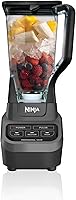
The Ninja Nutri-Blender Pro BN401 comes with two 24 oz cups and two Auto-iQ presets for smoothies and crushed ice. Choose it if you also want a compact personal blender for those jobs, but check its manual before grinding beans.
What grind size can a blender make?
A blender can make coarse grounds for some brewing methods, but it may not produce a uniform grind. The same batch can contain fine particles and larger fragments.
For French press, a coarse texture is often the goal, so a few larger pieces may be acceptable. Cold brew also uses coarse grounds, though uneven particles may extract at different rates.
A finer grind takes more attention. Keep checking the texture rather than assuming extra blending will make every particle the same size.
Can you grind coffee beans finely in a blender?
You can keep pulsing to make smaller particles, but a blender may not make them evenly fine. Fine dust can form while larger pieces remain in the jar.
That unevenness matters for methods such as espresso, which depend on a consistent grind. If fine, repeatable grounds are important to your brew, choose a burr grinder with settings suited to your brewer.
Does a blender change the coffee's flavor?
Uneven grounds are the main concern because fine and large particles can extract at different rates. That can make the brewed cup less consistent.
Grind only what you need, then transfer the grounds promptly. Let the jar rest briefly between bursts so you can check the texture and avoid running the motor longer than needed.
Which blender suits occasional coffee grinding?
Choose a blender only if its manual allows dry ingredients and the jar can handle a small batch. Look for controls that let you stop and check the grounds easily, rather than choosing by wattage alone.
The nutribullet Pro+ N12-1001MK includes 24 oz and 32 oz cups and has a pulse function. It suits someone who also wants a personal blender for drinks and chunky foods, but skip it for coffee if the manual does not allow dry beans.
The nutribullet 600W Personal Blender NBR-0601 includes a 24 oz cup and an extractor blade. It may suit someone who wants a simple personal blender for fruits, vegetables, and liquids, but its stated uses don't include dry beans, so confirm before trying them.
For a broader look at jar styles and controls, see our countertop blender guide. If coffee is the only dry ingredient you plan to process, a dedicated grinder is the more practical choice.
What mistakes should you avoid when grinding coffee in a blender?
Avoid large batches, long blending runs, and using a jar that's wet or not approved for dry ingredients. These habits make it harder to control the grind and may conflict with the blender's instructions.
- Don't fill the jar to the top. Beans need room to move around the blades.
- Don't hold the button down for a long run. Pulse, stop, and inspect.
- Don't assume a smoothie or ice program is designed for coffee beans.
- Don't handle the blade assembly while the blender is plugged in.
- Don't keep going if the motor strains or the beans remain stuck.
If your blender has only preset programs, check whether the manual gives guidance for dry ingredients before choosing a cycle. For basic cleaning and safe handling, see how to clean a blender jar, lid, and blades.
How do you clean a blender after grinding coffee?
Brush or wipe grounds from the dry jar and blade area before washing. Fine coffee particles can cling near the blade assembly and in corners.
Unplug the blender before handling its blades, and follow the cleaning steps for your model. Don't put a motor base in water; clean removable parts only as directed.
If the blade assembly needs removal, read how to remove and replace a blender blade and follow your model's instructions. Clean the jar promptly so grounds don't remain around the blades between uses.
When should you choose a coffee grinder instead?
Choose a burr grinder when you need an even grind, a repeatable result, or a specific fine setting. That's the better fit for espresso, pour-over, and frequent brewing.
A blender makes sense when you already own one, the manual permits dry ingredients, and a coarse grind is good enough. A coffee grinder is the right choice when you brew often, want to change grind sizes, or don't want to pulse and inspect each batch.
Can you grind coffee beans in a blender, or should you buy a grinder?
Use a blender for an occasional small batch of coarse grounds, and choose a burr grinder for consistent results or espresso. Check the manual before you try dry beans, then work in short pulses and stop when the texture is close enough for your brew.
If you're deciding what else your blender can process, see can you put ice in a blender?.
Frequently asked questions
Can you grind coffee beans in a blender?
Yes. A blender can break whole coffee beans into grounds, especially if you use a small amount and pulse in short bursts.
First check the manual to make sure dry ingredients are allowed.
The grind is often less even than one from a burr grinder, so inspect it before brewing.
A blender is a practical occasional option for coarse grounds, while espresso and other precise methods call for a grinder with adjustable settings.
How long should you blend coffee beans?
Pulse for a few seconds at a time, then stop and inspect the grounds. Shake the jar gently if the beans have settled, and repeat in short bursts until the texture is close to what you need.
There is no single timing that works for every jar or batch.
Stop if the motor strains or the beans stop moving freely.
Can a personal blender grind coffee beans?
It may, but first check the manual because some personal blenders are intended for liquids and specific blending tasks. If dry beans are allowed, keep the cup dry and use a small batch that can move around the blade area.
Stop if the beans stay stuck, the motor strains, or the appliance behaves unusually.
A personal blender can suit occasional coarse grinding, but a grinder offers more control.
Is a blender grind good for espresso?
Usually not. Espresso needs fine, consistent grounds, and a blender can leave a mixture of large fragments and fine particles.
A burr grinder with adjustable settings is a better choice for espresso because it gives you more control over grind size.
A blender is better treated as an occasional option for a coarse grind.